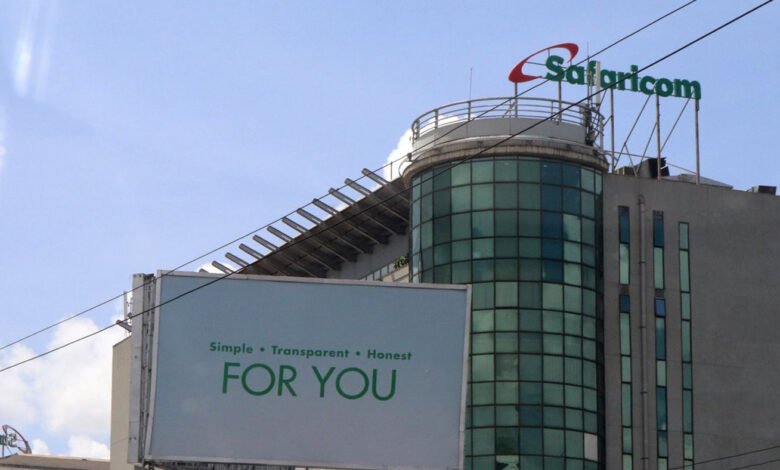
The Kenya Association of Stockbrokers and Investment Banks (KASIB) has endorsed the government’s plan to partially divest its shareholding in Safaricom Plc, in what it termed a strategic way to raise capital while retaining oversight of a critical national asset.
In a submission to Parliament on the proposed transaction, KASIB said the sale would help the government unlock billions of shillings for development spending without increasing public debt.
With Kenya facing tight fiscal conditions, the association argues that the divestiture offers a flexible source of funding that reduces pressure on borrowing.
KASIB supports the proposed sale of a strategic stake to Vodacom through the Nairobi Securities Exchange (NSE) Block Trading Board, and that it offers proper price discovery and investor protection.
Executing the transaction on the NSE, it says, reinforces the role of Kenya’s capital markets as the primary platform for large national asset transactions.
Proposal to Increase Public Offering
While backing the transaction, KASIB recommends changes to its structure to maximise public benefit. The association proposes that the government increase the total divestiture to 20 percent of its Safaricom stake, with an additional 5 percent offered directly to Kenyan investors through the NSE.
Under this proposal, Vodacom would acquire 15 percent, while the public would access a larger shareholding through a public offer. KASIB estimates that the additional public sale could raise about Ksh.68 billion, increasing total proceeds from the transaction to roughly Ksh.312 billion, around 28 percent more than the current plan.
Also Read: MPs Open Public Submissions on Plan to Sell 15% Stake in Safaricom
According to KASIB, a wider public offering would deepen the capital markets, increase liquidity, attract local and regional investors and strengthen Safaricom’s free float. It would also create a strong pipeline for future privatisations and initial public offerings (IPOs).
Safaricom to Remain Listed and Regulated
A key condition outlined by KASIB is that Safaricom must remain listed on the NSE, with no compulsory acquisition of minority shareholders. The association stresses that continued listing is critical to protecting investor confidence and maintaining liquidity in Kenya’s capital markets.
KASIB also argues that concerns about loss of government control are overstated. Safaricom operates in a heavily regulated sector, overseen by multiple agencies including the Communications Authority of Kenya, the Central Bank of Kenya, the Competition Authority and the Data Protection Commissioner.
These regulatory powers, it says, ensure that national interests remain protected regardless of the shareholding structure.
In addition, KASIB recommends that the government retain strong contractual safeguards, including rights to block mergers, protect employment, maintain headquarters and key operations in Kenya, and buy back shares if agreed conditions are breached.
Defending the Ksh.34 Pricing
Responding to criticism over the proposed Ksh.34 per share price, KASIB says no credible independent valuation has been presented to challenge the figure. The association explains that the current market price reflects short-term trading conditions, investor sentiment and liquidity constraints, not the true long-term value of a strategic stake.
It notes that strategic block transactions typically attract premiums of between 15 and 30 percent above market prices due to factors such as control rights, board representation, long-term cash flow expectations and operational synergies. In this context, KASIB argues that the proposed pricing falls within global market norms.
The association also points out that the depressed valuations seen at the NSE reflect economic headwinds, foreign investor outflows and limited institutional demand, rather than weaknesses specific to Safaricom.
The association has urged Parliament to adopt its recommendations to ensure the transaction delivers maximum value for Kenyans while safeguarding national and investor interests.