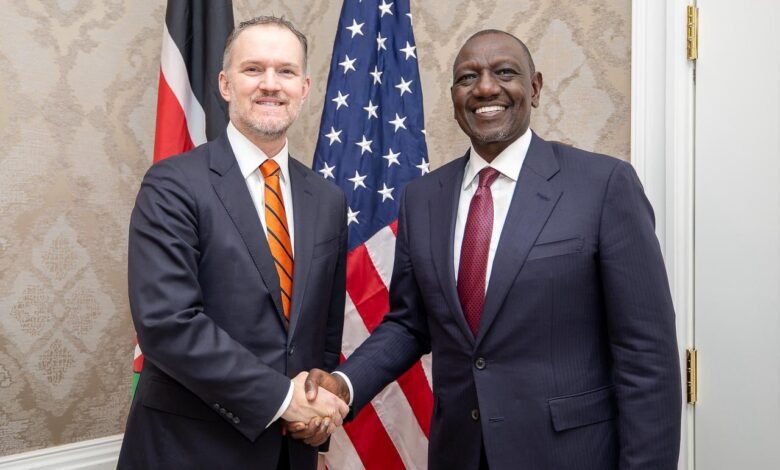
The United States and Kenya have signed a five-year $2.5 billion investment agreement in what was been described as a Health Cooperation Framework, following President William Ruto’s visit to the States.
Kenya is the first African nation to sign this kind of a deal in which the U.S agreed to contribute up to $1.6 billion toward key health priorities.
These include HIV/AIDS, tuberculosis, malaria, maternal and child health, disease surveillance, and emergency outbreak response.
In turn, Kenya will increase its domestic health spending by $850 million over the same period as it prepares to gradually assume more financial responsibility for these programs.
U.S. officials described the deal as a strategic investment that strengthens a key American ally while ensuring foreign assistance advances U.S. interests.
According to U.S Secretary of State Marco Rubio, the deal shifts toward “America First” global health agreements that encourage country self-reliance and improved health outcomes.
Also Read: US asks China to Stop Iran from Closing Strait of Hormuz
“We are not going to spend millions of dollars funding the NGO industrial complex while close and important partners like Kenya have very little influence on how healthcare money is spent. Bottom line – if you want to help a country, work with that country, not with a third party,” said Rubio.
Kenyan leaders, including President William Ruto and Health Cabinet Secretary Aden Duale, praised the agreement as fully aligned with Kenya’s ongoing reforms, particularly the expansion of the Social Health Authority and the country’s broader universal health coverage agenda.
The framework introduces several long-term reforms, such as transitioning procurement of medical commodities and the funding of frontline health workers from the U.S. to Kenya.
It also includes major investments in health data systems, supporting national electronic medical records and improving program monitoring for HIV/AIDS, TB, malaria, and other diseases.
It will further boost Kenya’s reimbursement mechanisms for faith-based and private health providers, positioning the country to build a more resilient and self-sustaining health system in the years ahead.
Rubio said 50 more African states are also lined up to sign this kind of a deal, but set forth Kenya, which will lead the rest as the Trump administration looks further to strengthen its influence on the continent.