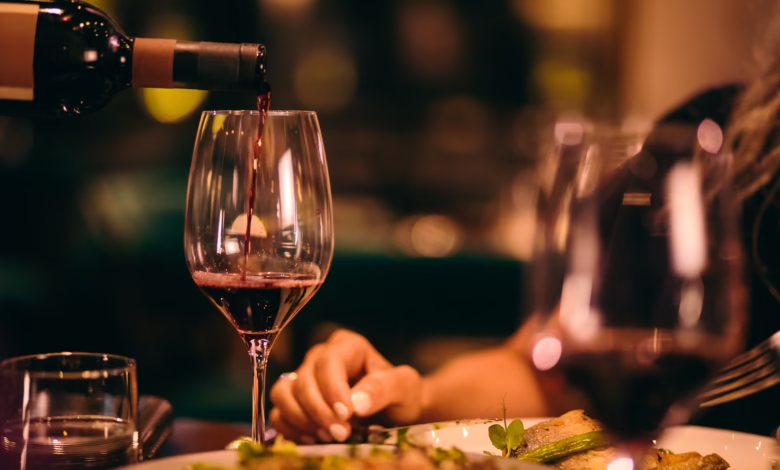
In Kenya’s vibrant hospitality scene, wine is finally breaking out of its old stereotype as a prestige pour reserved for special occasions.
Today, restaurateurs are positioning wine as a strategic business asset, one that boosts revenue, extends spend per cover and enhances overall guest experience in ways that beer and spirits often cannot.
Kenya’s wine market is growing both in maturity and value. Projections show the industry expanding from about Ksh.122 billion (USD 950 million) in 2024 to over Ksh.193 billion ($1.5 billion) by 2030, largely driven by premiumization rather than increased volume. Consumption volumes have remained stable at around 8,000 metric tons annually, but the quality of choice and the depth of demand are rising.
“For years, wine was a class signal,” says sommelier Petronila Simiyu. “Today people come to restaurants already curious and ask about varietals, regions and food pairings.” In fact, the increasing number of Italian restaurants and premium wine events in Nairobi like Gambero Rosso has helped nudge wine from the periphery into mainstream dining culture, making it a tool for higher table spend.
Italian wines, in particular, are finding a comfortable home on Kenyan restaurant lists. Recent data shows that imports of Italian wines grew by about 12 per cent in the first ten months of 2024, making Italy the third-largest supplier after South Africa and France. Varietals such as Prosecco, Chianti and Pinot Grigio are performing well in urban dining settings, thanks in part to their food-friendly nature and broad consumer appeal.
Chefs and sommeliers across the capital are increasingly leveraging wine to enhance menu profitability. Pairing recommendations, such as a crisp Italian white with seafood or a structured red with nyama choma, encourage customers to order wine by the glass or bottle, lifting average spend without significantly increasing kitchen costs. According to retail industry reporting, wine by the glass can retail for Ksh.600–800 per pour, meaning even modest orders generate meaningful margin compared to food alone.
Also Read: NSE Halts EABL Shares Trading Following Acquisition News by Japan’s Asahi Group
“Nairobi diners are now more informed,” observes Italian importer Roberto Miano. “They come with preferences, asking for vertical tastings or regional stories behind the wine.” This curiosity translates directly into profit: better-educated staff are more confident in recommending pairings and upselling bottles, turning what used to be a passive drink item into an active revenue driver.
Trade and education platforms are supporting this transformation. Events like the Gambero Rosso Top Italian Wine Roadshow combine curated tasting with masterclasses on varietals and pairing logic, helping restaurants deepen their wine knowledge and refine their lists. The interactive sessions benefit both front-of-house staff and management, improving confidence in selling wine as part of the dining experience.
Importers and distributors also note that better wine programmes can differentiate an establishment in a crowded market: A strong, well-told wine list signals quality, sophistication and a commitment to experience, attributes that often justify higher price points for both food and beverage.
In a sector still rebounding post-COVID, wine’s role has clearly moved beyond aesthetic to commercial. For Kenyan restaurateurs, it is no longer just about having wine on the menu, it is about using it strategically to cultivate loyalty, command premium pricing, and unlock new profitability horizons.