The Kenya Bankers Association (KBA) has urged the Central Bank of Kenya (CBK) to retain the benchmark lending rate at 9.00 percent, over the concern that cutting it down would be ill-timed.
The association’s concern comes on top of the hill of the Risk-Based Credit Pricing Model (RBCPM), which is still in the transition phase with the lenders.
KBA said maintaining the current rate would provide stability as banks embed the revised RBCPM, improve price comparability across lenders, and enhance transparency for borrowers.
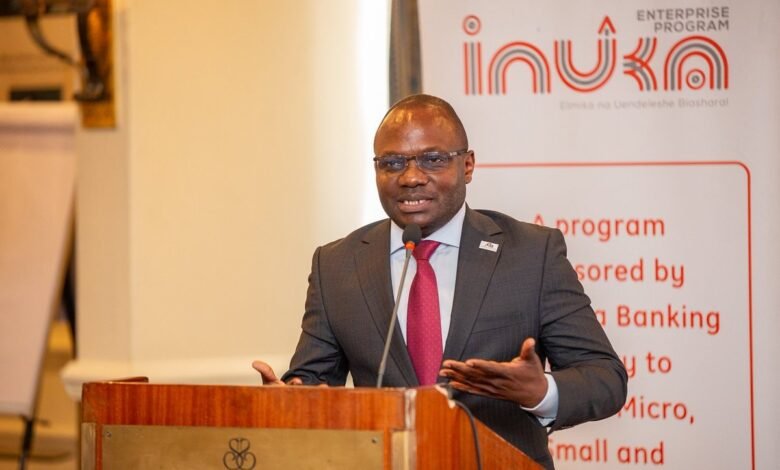
KBA Chief Executive Raymond Molenje said holding the rate steady would allow the new framework to take root, enabling customers to better understand how their borrowing costs are determined while giving banks room to align their systems.
The appeal comes alongside the association’s proposal for a 5 percent reduction in Pay As You Earn (PAYE) tax rates across all bands, a move it says would increase borrowers’ disposable income, strengthen repayment capacity, and widen access to credit for households and businesses.
“ A 5% reduction in PAYE across all tax bands will enable workers to regain purchasing power, consume more, and drive demand in manufacturing, agriculture, and trade. This will encourage borrowing, support businesses, and strengthen the economy,” said Molenje.
Under the updated RBCPM, variable-rate loans will be priced using the Central Bank Rate (CBR) plus a customer-specific risk premium, known as “K,” which is determined by the borrower’s risk profile at the time of application.
Also Read: Metropol CRB Inks Deal with KBA to Advance Gender-Inclusive Financial Data
Banks may also apply fees such as origination, processing, negotiation, and commitment charges, though these will only affect new credit facilities issued from December 1, 2025.
Existing borrowers will not incur additional fees on their current loans, and lenders are required to fully disclose the total cost of credit in line with CBK transparency rules.
The framework also encourages banks to adopt the Kenya Shilling Overnight Interbank Average (KESONIA) as the primary reference rate. KESONIA is an option should a lender choose not to use CBR.
The transaction-based benchmark (KESONIA) reflects average overnight lending costs between banks and is seen as more responsive to market conditions and closer to short-term Treasury Bill rates.
However, 48 percent of Kenya’s commercial banks have retained discretion to use the CBR, while 34 percent are mixing the rates, with only 18 percent relying solely on KESONIA.
Among the big players in the market who have preferred CBR are KCB and Equity. The CBR is currently at 9.00 percent compared to KESONIA’s 8.98 percent as of January 2026.
The policy debate comes even as Kenya’s annual inflation eased slightly to 4.4 percent in January 2026 from 4.5 percent in December, staying within the CBK’s target band of 2.5 to 7.5 percent.