

Kenya on Monday issued a strong condemnation of the latest wave of strikes across the Gulf, as the Middle East conflict widens and pulls more countries into its orbit.
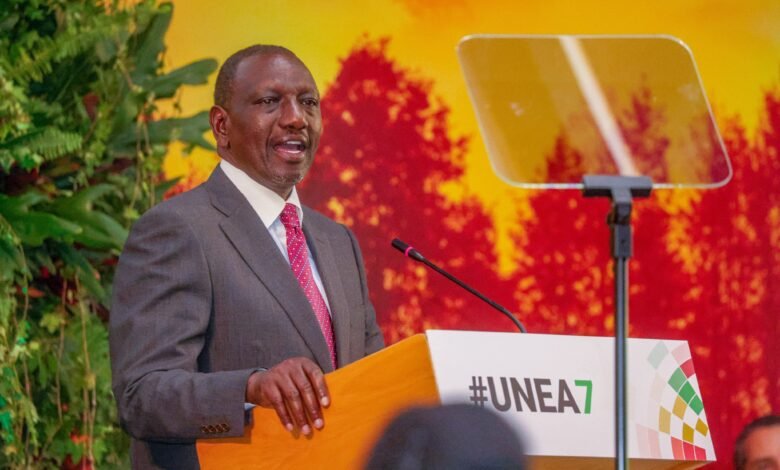
President William Ruto warned that the expanding crisis threatens not just the region, but global peace and security at a particularly fragile moment in world affairs.
In a statement posted on X, Ruto denounced attacks targeting the United Arab Emirates, Qatar, Saudi Arabia, Iraq, Oman, Kuwait, Jordan and Bahrain.
He described the growing regionalisation of the conflict as a grave danger, urging all parties to step back from further escalation. The president called for urgent, broad-based engagement among stakeholders and stressed that long-standing multilateral institutions remain essential in resolving the crisis.
The latest escalation began after the United States and Israel launched fresh strikes against senior Iranian figures, reportedly killing Ayatollah Khamenei, former president Mahmoud Ahmadinejad and other high-ranking military leaders.
Tehran responded with missile and drone attacks targeting U.S. interests and bases across the Middle East and the Gulf, intensifying tensions in an already volatile region.
As the confrontation deepens, countries that have long tried to maintain a delicate balance between Washington, Tel Aviv and Tehran now find themselves navigating increasingly difficult terrain. For Kenya, the stakes are both diplomatic and economic.
Also Read: Anxiety Among Kenyan Tea Exporters Intensifies as Iran-U.S War Intensifies
Tens of thousands of Kenyans live and work across the Gulf states, sending vital remittances back home. At the same time, Nairobi has cultivated growing commercial ties with several of the countries now caught up in the conflict.
In January 2025, President Ruto and UAE President Sheikh Mohamed bin Zayed Al Nahyan oversaw the signing of a Comprehensive Economic Partnership Agreement, the first such deal the UAE concluded with a mainland African country.
The UAE is among Kenya’s largest import sources and ranks in the top tier of destinations for Kenyan exports, including tea — a crucial market especially after Sudan halted Kenyan tea imports over diplomatic tensions.
Kenya has also strengthened ties with Iran in recent years.
During a visit to Nairobi in July 2023 by then Iranian President Ebrahim Raisi, Ruto described Iran as a strategic partner and pointed to rapidly expanding trade links.
Tea exports to Tehran surged significantly during that period, and the two countries signed agreements covering sectors such as ICT, fisheries, animal health, livestock production and investment promotion. Nairobi has actively encouraged Iranian investment in manufacturing, healthcare, the blue economy and automotive assembly as part of a broader effort to diversify economic partnerships.
In a conflict where alliances are shifting and tensions are rising, Nairobi’s call for restraint reflects not only concern for global stability, but also the very real domestic stakes tied to peace in the Gulf.
