

Kenya’s small businesses contribute over Ksh 1 trillion in bank deposits and support nearly 15 million jobs yet receive just a fraction of available credit, the Digital Financial Services Association of Kenya (DFSAK) has warned.
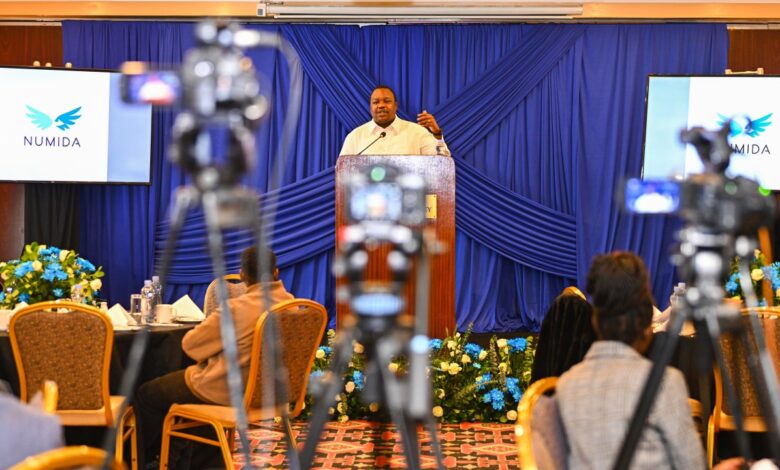
Speaking at the official Nairobi launch of Ugandan fintech Numida, DFSAK Chairman Kevin Mutiso said the core problem facing Kenya’s 7.4 million micro, small and medium enterprises is not whether they are viable borrowers. It is whether the financial system is aligned to serve them.
The numbers he cited paint a stark picture. Licensed digital credit providers grew their loan book from approximately Ksh.76.8 billion in June 2025 to Ksh.110 billion by December 2025. Yet MSME loan accounts accounted for just 21.4% of total bank lending a sharp contrast to the sector’s outsized contribution to the economy. MSMEs generated an estimated Ksh.91.8 billion in lending income for financial institutions in 2024 alone and contribute close to a third of Kenya’s GDP.
“These are not fragile, risky borrowers. “These are the backbone of the Kenyan economy,” Mutiso said
He pointed to well-documented structural barriers as the root cause of the mismatch that included stringent collateral requirements, rigid repayment terms that fail to account for the irregular cash flows common among small businesses, and lending products designed for a fundamentally different type of borrower. The consequences are measurable for instance one in five MSMEs fails within its first year, and only around a third survive beyond a decade.
Mutiso also drew attention to a broader concern around financial health, distinguishing it from mere access. While 84% of Kenyans now have access to credit, only 17% are genuinely able to meet daily expenses, absorb financial shocks, and invest in their futures at the same time.
“Access was always the first step. “Financial health is the destination,” he said
DFSAK said it is observing a notable shift in the market, which it describes as the “premiumisation” of MSME lending a trend in which established entrepreneurs are increasingly seeking financial partners that understand their businesses and offer relationship-driven support, rather than purely transactional products.
The association also flagged the persistent underservice of women-led businesses as a priority, noting its membership of the We Finance Code as part of efforts to address the gap.
Numida, which offers working capital loans to established small businesses, enters the Kenyan market positioning itself around that combination of technology, responsible lending, and dedicated relationship support.
