

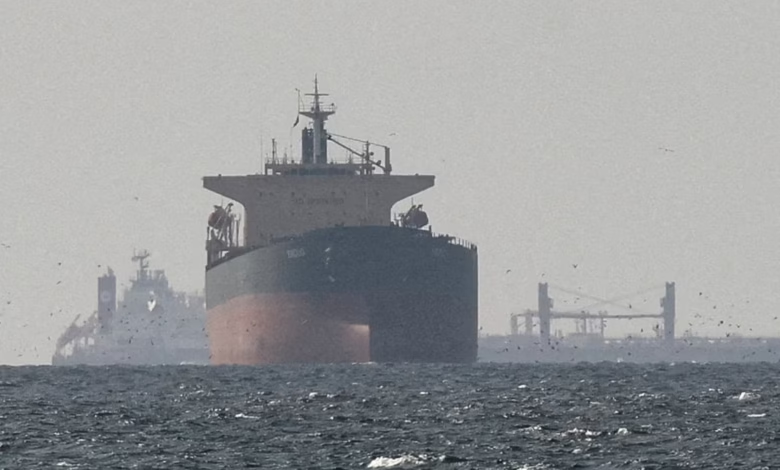
For nearly two years, Kenya has relied on a government-to-government fuel deal with Gulf oil giants to keep its economy running. Under this arrangement, companies like Saudi Aramco, Abu Dhabi National Oil Company, and Emirates National Oil Company have supplied petroleum products directly to the country, helping stabilize prices and ensure steady supply.
But the ongoing conflict involving the United States, Israel, and Iran has turned one of the world’s most critical oil routes, the Strait of Hormuz, into a high-risk zone. This narrow waterway handles nearly a quarter of global oil shipments, making it a vital artery for energy supplies worldwide.
With rising attacks on vessels and growing security concerns, oil shipments that once moved smoothly from the Arabian Gulf are now being forced to take a different path.
For Kenya, this has meant a significant logistical shift. Instead of loading fuel in traditional Gulf ports, suppliers are now sourcing and shipping products from safer alternative hubs such as India and Belgium.
A New Route to Mombasa
Fuel destined for Kenya is now being loaded from places like Antwerp-Bruges in Belgium, Sikka in India, and Jizan along the Red Sea coast.
Also Read: Kenya to Earn Ksh.371 Billion in Oil Revenue, Says CS Mabdi
From there, vessels are taking longer but safer routes through the Mediterranean and the Red Sea before arriving at the Port of Mombasa.
In April alone, several shipments are expected, with hundreds of millions of litres of petrol from Belgium, large volumes of diesel and kerosene from India and additional supplies routed through the Red Sea
All of this is a coordinated effort to keep Kenya’s fuel supply uninterrupted despite the global turmoil.
Why This Matters for Kenya
Fuel is the backbone of the economy because it powers transport, manufacturing, agriculture, and nearly every sector. Any disruption can quickly ripple through to higher costs of living.
So far, the government has reassured Kenyans that there is no immediate risk of shortages. Energy officials say supply remains stable, with enough stock to cover several weeks of demand, and more shipments already on the way.
That stability is largely thanks to the long-term agreements Kenya has in place with Gulf suppliers. Unlike countries that rely on the volatile spot market, Kenya is shielded from sudden price spikes and supply gaps.
