

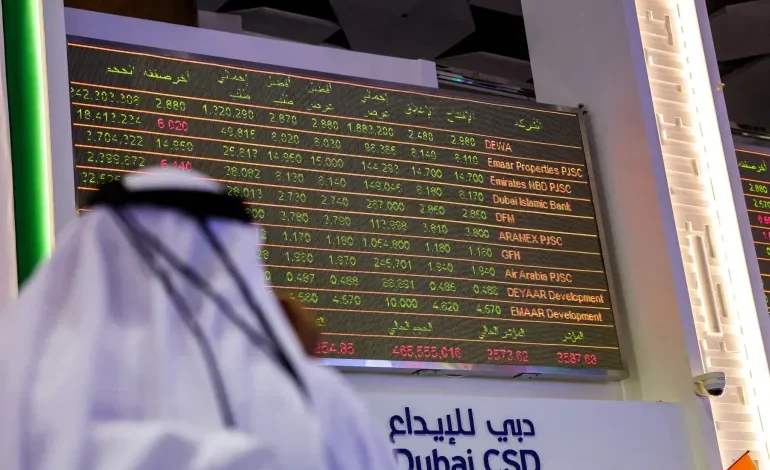
As tensions in the Middle East have sharply escalated over the past three days, the UAE shut down its major stock markets, reflecting just how seriously regional instability is now affecting even the world’s financial hubs.
On Monday and Tuesday, March 2 and 3, 2026, both the Abu Dhabi Securities Exchange (ADX) and the Dubai Financial Market (DFM) were ordered to remain closed by the newly established Capital Market Authority (United Arab Emirates).
The decision came after a flurry of missile and drone strikes across Gulf countries, including infrastructure and facilities in the UAE, as a retaliation linked to the ongoing conflict involving Iran, the United States and Israel.
These hostilities have rattled markets, disrupted airspace and heightened fears about the safety of financial systems in a region that plays a central role in global energy and trade.
Also Read: Oil Prices Rise as Investors Assess Iran-Israel Ceasefire
Officials said the temporary closure was a precautionary measure to give regulators, investors and market participants time to assess the situation and guard against panic selling or disorderly trading in an environment of deep uncertainty.
The UAE’s stock exchanges host some of the Gulf’s most valuable companies, and the regulator’s move has effectively paused trading worth billions of dollars until conditions stabilise.
Across the Gulf, other markets also felt the tremors of the crisis and some indexes sank sharply when they opened, while others, like Kuwait’s exchange, suspended trading entirely.
The aim of the UAE’s shutdown is not to freeze markets indefinitely, but to ensure that when trading does resume, it does so from a position of greater oversight and confidence.
In the meantime, investors and businesses are waiting for clearer signals on how regional tensions will unfold and what that will mean for the Gulf’s financial landscape.
