

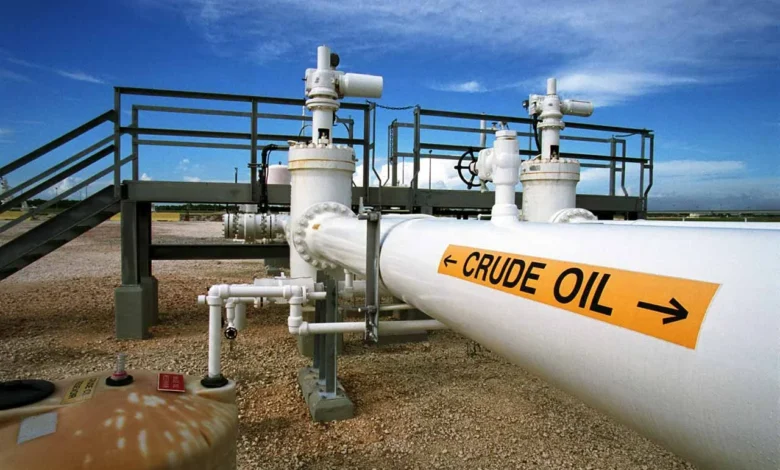
Kenya could earn as much as $2.9 billion (about Ksh.371 billion) from oil production if global prices remain favourable, the National Treasury has told Parliament as lawmakers review the proposed Field Development Plan (FDP) for Blocks T6 and T7.
Appearing before energy committees of both the National Assembly and the Senate, Treasury Cabinet Secretary John Mbadi sought to reassure legislators that the oil project will not push the country deeper into debt.
He explained that under Kenya’s Production Sharing Contract framework, the private contractor carries the full cost and risk of exploration, development and production.
“The FDP does not create any explicit or implicit public debt obligation for the Government,” Mbadi said, stressing that financing remains the responsibility of the contractor.
How much Kenya ultimately earns will depend heavily on global oil prices. At $70 per barrel, the government could collect up to $2.9 billion over the life of the project.
At $60 per barrel, earnings drop significantly, and at $50, projected revenues fall sharply to just over $400 million.
The figures underline how exposed the project is to swings in international oil markets.
Beyond direct revenue from profit oil sharing and state participation, the Treasury expects related benefits across the economy.
Kenya Pipeline Refinery Limited (KPRL) is projected to earn billions in storage and handling fees, while the Kenya Ports Authority (KPA) could generate substantial income from operations at the New Kipevu Oil Jetty. The project is also expected to create more than 3,000 jobs, contributing to income tax collections and social security contributions, while supporting growth in upstream and midstream activities.
But even so, negotiations remain delicate and contractors have requested tax concessions worth about $1.3 billion to make the project commercially viable.
Treasury estimates show that granting all the concessions would significantly reduce the government’s net cash flow, even as it improves returns for investors and makes financing easier.
Mbadi reminded lawmakers that any tax waivers must comply with Article 210 of the Constitution, meaning exemptions can only be granted through legislation.
Also Read: Turkana oil to create more than 50,000 Maritime jobs for Kenyans
Treasury officials also defended Kenya’s risk-sharing structure, saying it follows international best practice. Contractors shoulder the exploration and operational risks, while cost recovery is capped and subject to audits and approvals.
Government revenues begin once oil starts flowing and increase as the contractor recovers its initial investment.
On public participation, the government retains a 20 percent back-in right. If exercised, it would require Kenya to contribute more than $1.2 billion. In addition, enabling infrastructure such as land acquisition, roads, power, water and crude handling facilities is estimated to cost over $430 million. Treasury says some of these costs are already budgeted for, while others are under feasibility review.
Transporting the crude, as put by Treasury, will follow a phased approach.
Initially, oil would be moved by trucks to reduce upfront capital costs, before transitioning to rail to improve efficiency and cut long-term expenses.
Decommissioning costs are projected at over $330 million and will be covered through a dedicated fund established under the Petroleum Act to prevent liabilities from falling back on the State.
Treasury also reflected on lessons from the Early Oil Pilot Scheme, which generated $28.3 million in revenue against $62.7 million in expenditure.
Mbadi acknowledged that while the pilot was not designed as a commercial venture, it underscored the need for strong oversight and monitoring frameworks.
If commercial production proceeds, oil revenues will be treated as non-tax revenue and deposited into a dedicated petroleum fund under the Petroleum Act and the Public Finance Management
