

Kenya plans to solidify its stance as Africa’s digital connectivity leader. Two new undersea fibre-optic cables are expected to land before 2027. They will increase international internet capacity as demand for cloud, AI, and digital services rises.
Kenya’s bandwidth has risen 16.4% to 28.1 terabits per second. 4G subscriptions surpass 36 million, underscoring demand for high-speed connectivity and data-heavy applications.
The projects feature a 4,108-kilometre subsea cable linking Oman to Mombasa through a Meta and Safaricom PLC partnership. Also, the 10,000-kilometre Africa-1 cable will connect France, Africa and the Middle East. TeleGeography reports that both systems should be operational before 2027. This will provide Kenya with additional international internet routes and greater network resilience.
The two new landings will increase Kenya’s submarine cable connections from seven to nine. This will cement its role as East Africa’s principal international internet gateway. Expansion will offer more routing options to internet service providers, enterprises and cloud operators. It reduces reliance on existing cable systems and improves outage redundancy.
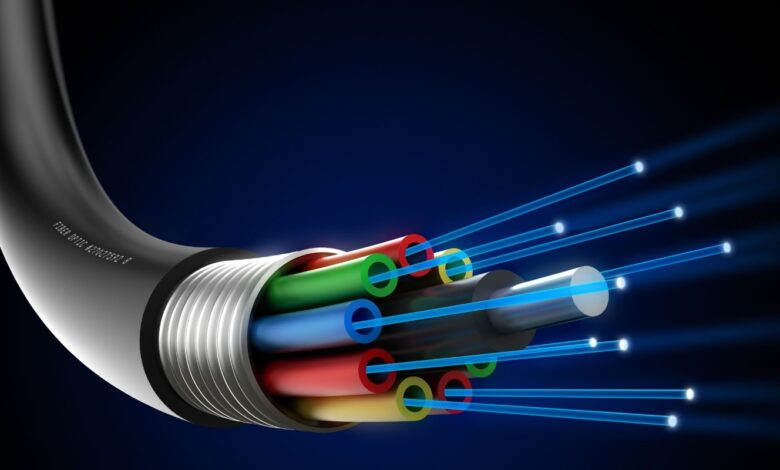
Submarine fibre-optic cables remain the backbone of the global internet, carrying the vast majority of international data traffic. Low-Earth orbit satellite networks extend internet access to remote and underserved areas. Fibre infrastructure retains the capacity and speed needed for hyperscale cloud platforms. It also delivers cost efficiency for enterprise connectivity, video streaming, financial services, and AI-powered applications.
Kenya already ranks among Africa’s most connected nations, trailing only Egypt, Djibouti, South Africa and Nigeria in submarine cable connectivity. The two additional systems are expected to enhance the country’s attractiveness as a regional digital gateway. It will support faster, more reliable connections for businesses and consumers across East Africa.
While available bandwidth grew, utilized international bandwidth increased by 3%, suggesting operators are provisioning capacity ahead of future demand rather than waiting for networks to become congested.
Mobile broadband subscriptions climbed to 52.9 million during the quarter, while mobile data subscriptions reached 62.6 million. Mobile broadband consumption also exceeded 800 million GB, with average data usage per subscription rising from 14.6 GB to 15.1 GB in just three months. Fixed internet subscriptions grew to 2.66 million, adding further pressure on international connectivity infrastructure.
Industry experts say the increased international capacity is likely to stimulate investment in hyper-scale data centres, cloud infrastructure and digital innovation, while enabling businesses to deploy more data-intensive technologies without the bottlenecks associated with limited international bandwidth.
The expanded infrastructure is also expected to strengthen Kenya’s ambitions of becoming a regional technology powerhouse by supporting cross-border digital trade, fintech growth, e-commerce and AI-driven services. As enterprises continue migrating operations to the cloud and demand for digital services rises, resilient international connectivity is becoming a critical component of the country’s digital economy.
With two more sub-sea cable systems on the horizon, Kenya is positioning itself to meet future connectivity needs while reinforcing its status as one of Africa’s fastest-growing digital ecosystems.
