

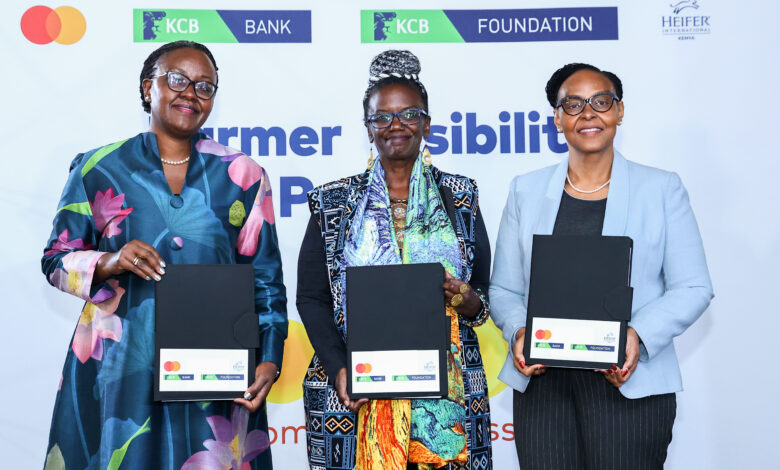
Heifer International, KCB Bank and Mastercard have rolled out a nine month pilot project aimed at digitising payments and transaction records for 30,000 smallholder dairy farmers across Kenya.
The initiative, named the Farmer Visibility Project, will work directly with farmers and their cooperatives to digitally capture milk deliveries, payments, savings and purchases of agricultural inputs.
Heifer International Kenya Country Director Wairimu Munyinyi-Wahome said the project goes beyond simple digitisation, positioning it instead as a step toward recognising farmers as legitimate business people with a right to control their own data.
“This is more than digitizing transactions. It is about recognizing farmers as business people, giving them greater control over their own data and ensuring that digital technology creates real economic opportunities. Together with our partners, we are building a more inclusive, digitally connected and resilient dairy ecosystem,” said Munyinyi-Wahome.
The digital records generated through the project are expected to build transaction histories that give lenders clearer visibility into farmers’ cash flows and business activity, a move that could open the door to formal financing for a segment of the population that has traditionally struggled to access credit.
Also Read: Applications open for 3rd Mastercard Foundation EdTech Fellowship in Kenya
The pilot responds directly to long standing structural challenges in Kenya’s dairy sector. Cash based payments, informal record-keeping and delayed disbursements from cooperatives have often left farmers without any documented income history, a gap that also fuels cash-flow pressure and pushes some producers toward informal, undocumented milk sales.
Mastercard will anchor the technical backbone of the project, deploying its Farm Pass capabilities through the Community Pass platform to create digital farmer profiles and record transactions across the dairy value chain. The system is designed to strengthen financial inclusion by giving farmers documented financial histories that support their entry into formal financial services, while also capturing input purchases and enabling card issuance and digital payments in rural areas with limited banking infrastructure.
KCB Bank will handle the banking side of the rollout, opening accounts for participating farmers, processing digital payments, issuing cards and supporting the agents and merchants involved in the ecosystem. The bank will also extend access to broader financial products, including credit, savings and insurance.
The project lands at a time when Kenya’s dairy farmers continue to grapple with a heavy cost burden. High production costs, low farm-gate milk prices and payment delays from major buyers such as New KCC, which can stretch for months, have squeezed household incomes for years.
Compounding these pressures are poor quality animal feeds that have stagnated milk production, alongside inadequate cooling and storage infrastructure.
Together, these factors help explain why so many smallholder farmers remain locked out of formal financial systems, relying instead on cash transactions and informal record-keeping that render them effectively invisible to lenders.
