

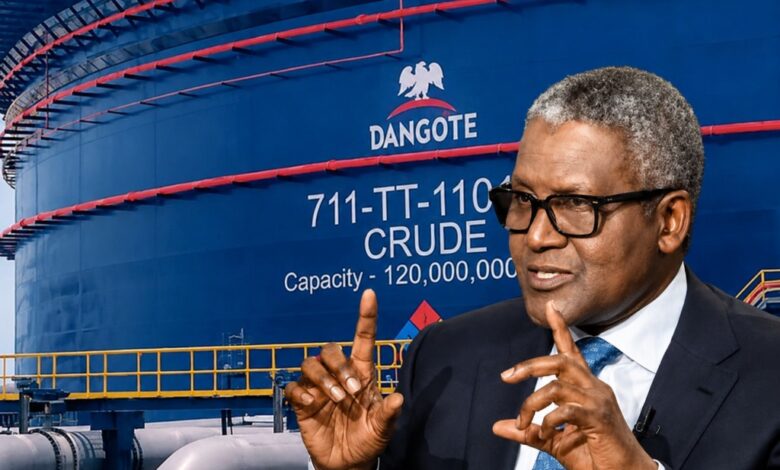
Aliko Dangote, is set to break ground in September on a proposed Ksh.2.59 trillion ($20 billion) refinery and petrochemical complex on Kenya’s northern coast, in what would become the largest single foreign direct investment in the country’s history and East Africa’s largest refining project to date.
The Dangote Group has offered Kenya and other East African Community member states a combined 30 percent equity stake in the venture, with Kenya positioned to take up a 10 percent share valued at roughly $500 million, according to David Ndii, economic adviser to President William Ruto.
Speaking at a capital markets forum in Nairobi, Ndii said Ethiopia has also committed to the project, while Uganda’s participation remains undecided. Rwanda has expressed interest as well.
“He has offered us and other East African countries 30 percent investment, so we are taking up ours. But there are some diplomatic kind of things we need to manage with our neighbors; I don’t need to go into the EAC political stories. But I think the potential partners there are us, Ethiopia, definitely on board, and Rwanda. Uganda is 50-50,” Ndii said.
The proposed facility will be built on Lamu Island and is expected to process 700,000 barrels of crude per day, matching the scale of Dangote’s flagship refinery in Lagos, Nigeria.
Once complete, it would become East Africa’s largest refining complex, supplying refined petroleum products to Kenya and neighbouring landlocked economies while reducing the region’s long-standing dependence on imported fuel.
Also Read: Inside Aliko Dangote’s 2,635 Hectares $20 Billion Oil Refinery
Ndii put the total regional investment commitment from participating East African governments at approximately $1.5 billion, while the refinery component alone could cost up to $16 billion. Including the broader petrochemical complex and associated port infrastructure, the total project value is estimated at around $20 billion. Construction is expected to take between three and five years from groundbreaking.
Ndii framed the project as a direct response to one of Kenya’s most persistent import cost burdens. He said Kenya currently spends approximately $2 billion annually on shipping and insurance costs tied to importing petroleum products, on top of ex-refinery price premiums and traders’ margins passed on by international suppliers.
A regional refinery, he argued, would give Kenya a stronger value proposition, provided the country purchases refined products at prevailing border prices rather than international import benchmarks, effectively cutting out a significant share of the logistics and margin costs currently baked into pump prices.
The Lamu project extends Dangote’s ambitions to build out refining capacity across the African continent, following the launch of his 650,000-barrel-per-day Dangote Petroleum Refinery in Lagos, which began operations in 2024 and has already reshaped Nigeria’s fuel import dynamics.
Should it proceed as planned, the Lamu refinery would represent the Dangote Group’s largest refining investment outside Nigeria and, based on its projected value, would rank as Dangote’s second-largest investment on the continent, trailing only the Lagos refinery and petrochemical complex.
For Kenya, the project carries implications well beyond fuel prices. A facility of this scale would position Lamu as a strategic energy and logistics hub for the wider East African Community, while giving Nairobi equity exposure to a sector it has historically only participated in as an importer.
