

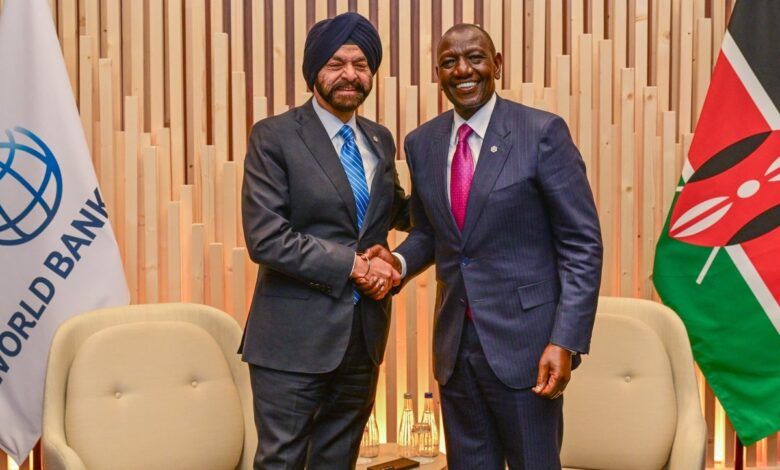
The National Treasury is seeking to unlock up to Ksh.151.2 billion ($1.1bn) in World Bank financing for the 2026/27 fiscal year, as the government works to stabilise public finances while preparing for potential economic shocks, including the risk of erratic rainfall later this year.
The funding, outlined in the Treasury’s Annual Borrowing Plan, would be channelled through three World Bank facilities, each carrying its own conditions and purpose.
The largest tranche, Ksh.94.2 billion, would come through the Development Policy Operation (DPO), a lending instrument the World Bank uses to support governments undertaking specific policy and institutional reforms.
A further Ksh.52 billion would be accessed through the Rapid Response Option, intended for fast disbursal in the event of an economic shock, while Ksh5 billion would come through the Programme-for-Results facility.
Unlike standard budget support, the DPO funding is conditional.
Also Read: World Bank Approves Ksh.97 Billion Loan For Kenya’s Governance and Social Protection Reforms
Kenya must meet a set of governance benchmarks before the next tranche is released, including strengthening legal protections for whistleblowers, tightening disclosure requirements for public officials’ personal financial interests, and improving records on beneficial ownership of companies, a long-standing gap that anti-corruption watchdogs say has allowed opaque business dealings with the state to flourish.
The Treasury has also been directed to revise public financial management rules that govern how the national budget can be altered mid-year, along with cleaning up government payroll data and tightening oversight of public-private partnership agreements.
These conditions echo those attached to an earlier Ksh.97 billion package the World Bank approved in June under the Kenya Fiscal Sustainability and Resilient Growth DPO, part of a broader pattern of reform-linked lending that has become increasingly central to how the government finances its budget.
Critics of this style of lending argue it hands external institutions outsized influence over domestic policy, while the government maintains the reforms are necessary steps toward long-term fiscal discipline and improved investor confidence.
Alongside the reform-linked financing, Treasury officials are also moving to secure emergency funding.
The Ksh.52 billion Rapid Response Option is designed to be disbursed quickly in a crisis, though the government says it has yet to finalise which categories of spending the facility would actually cover.
That effort runs parallel to a separate push for roughly Ksh.58 billion through a Contingent Emergency Response Project, financing that would be deployed to help the government respond to economic shocks or adverse weather, including the anticipated El Niño rains expected in October.
The dual-track approach, courting long-term reform financing while stockpiling emergency reserves, reflects a broader dilemma facing several sub-Saharan African economies: the need to keep borrowing to plug budget gaps and manage climate risk, even as public debt burdens climb and citizens face a sustained cost-of-living squeeze.
